
Blog Details
33. Beyond Compliance: The Strategic Value of a Virtual CFO
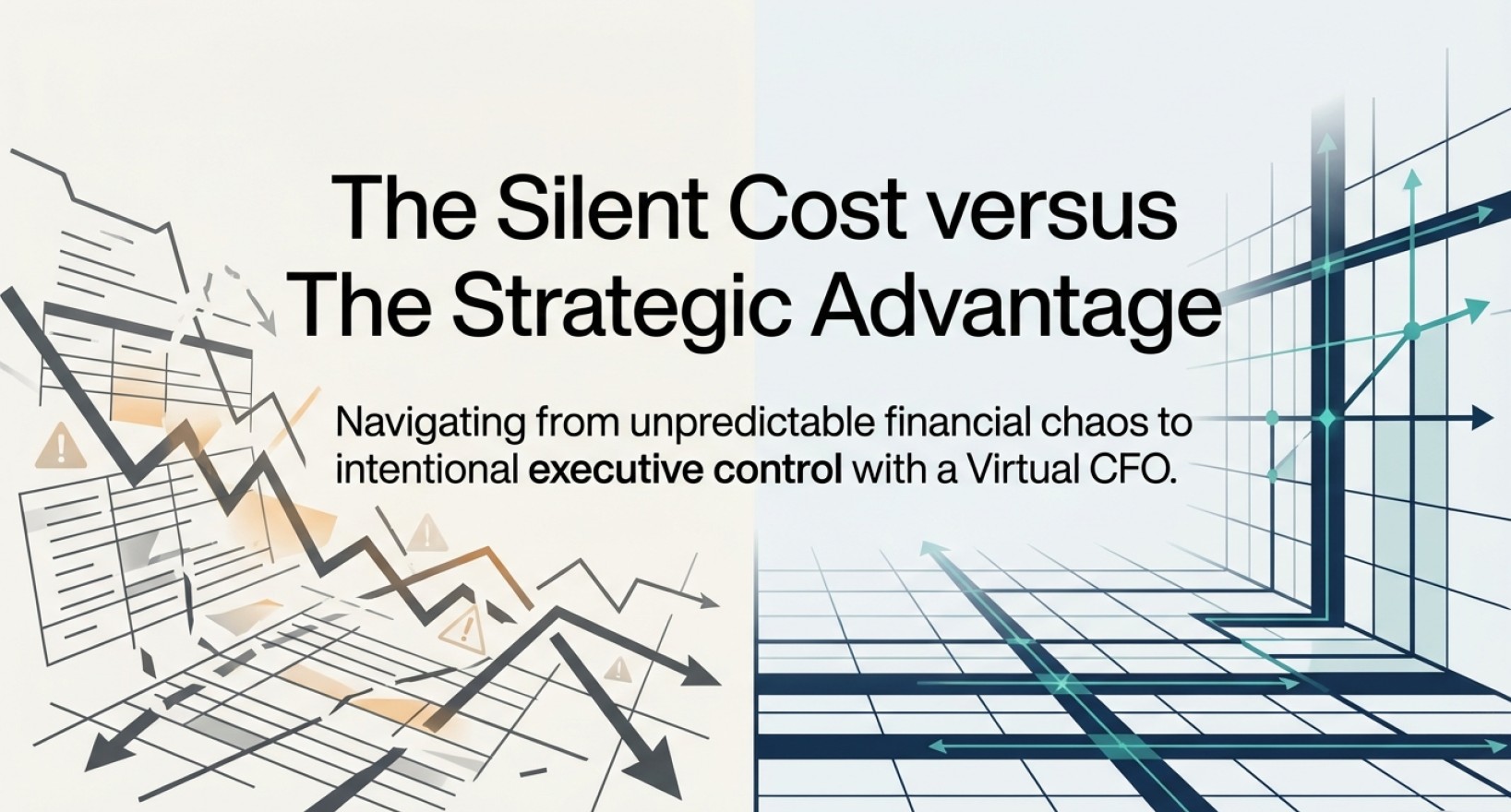
Every business carefully tracks its revenue and expenses. Yet, many overlook a silent cost — the cost of non-compliance.
This cost is not included in a budget, in contrast to regular business expenses. It arrives unexpectedly, often through penalties, interest, or regulatory scrutiny, quietly affecting the financial stability of the business.
Non-compliance rarely remains a single isolated issue. In most cases, it triggers a chain reaction within the business, where one consequence gradually leads to another.
Lapse → Penalty → Cash flow issue → Regulatory scrutiny → Credibility / business impact
What may begin as a simple oversight, like failing to file or delaying compliance, can quickly turn into more significant problems for the company.
- Immediate financial hit : Penalties, late fees, and interest charges create unexpected expenses for the business.
- Management distraction : Time and effort are diverted toward responding to notices and resolving compliance issues instead of focusing on business growth.
- Increased regulatory scrutiny : Authorities may subject the business to closer monitoring, assessments, or audits.
- Reputation and trust impact : Repeated compliance failures can reduce the trust of lenders, investors, and business partners.
From Financial Chaos to Financial Control: The Virtual CFO Advantage
- Predictive Risk Monitoring
Virtual CFOs don’t just track what’s due—they analyse financial trends and regulatory changes to anticipate potential compliance risks. This forward-looking approach allows businesses to act before problems emerge. - Prioritizing What Matters
Not every deadline or obligation carries the same risk. A Virtual CFO helps businesses focus on critical compliance areas first, allocating resources efficiently and preventing small issues from escalating. - Strategic Cash Flow Management
Unexpected penalties or tax obligations can disrupt operations. A Virtual CFO ensures funds are allocated efficiently, forecasts cash requirements, and builds buffers to absorb financial shocks. - Intelligent Decision Support
Beyond compliance, a Virtual CFO provides actionable insights—highlighting where costs can be optimized, investments can be made, or risks can be mitigated. This keeps management focused on growth instead of firefighting. - Continuous Process Improvement
Virtual CFOs identify gaps in financial systems and workflows, introducing automation, reporting dashboards, and structured processes that prevent errors and make compliance effortless.
More than just missing a deadline, non-compliance can have a cascading effect on operations, finances, cash flow, and even the reputation of the company. A Virtual CFO goes beyond numbers—they safeguard the business, restore order, and help leadership focus on growth, proactive compliance, and timely insights. For forward-thinking businesses, the consistent value of a virtual CFO far outweighs the hidden risks of non-compliance.
Ultimately, the cost of a Virtual CFO is controlled and intentional, while the cost of non-compliance is reactive, uncertain, and potentially crippling. By choosing a Virtual CFO, businesses not only avoid financial and regulatory risks but also gain clarity, stability, and confidence to navigate the complexities of growth.
Compiled by Ms. Keerthana, Audit Assistant - H M R R & Associates
Latest posts

























Copyright | All Rights Reserved H M R R & Associates